
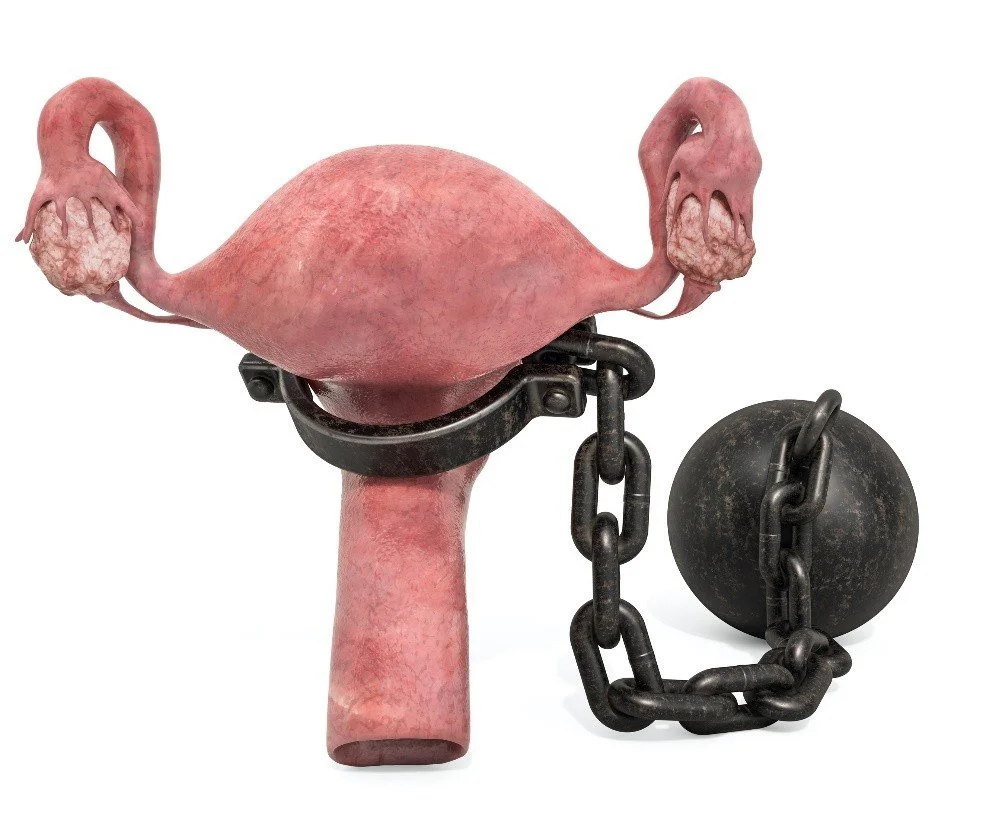
Shackled by Abnormal Uterine Bleeding
A normal menstrual cycle occurs every 21 to 35 days and lasts typically 2 to 7 days. One third (1/3) of women will experience abnormal bleeding at some point in their life. Bleeding after menopause is NEVER normal and should prompt evaluation by a medical provider. When you discuss your bleeding with your provider, they most likely will use the most common mnemonic to help diagnose this issue.
· P – Polyp (A polyp is a benign growth inside the uterus.)
· A – Adenomyosis (Adenomyosis occurs when the endometrial glands implant themselves in the wall of the uterus causing significant pain with bleeding. This is a form of endometriosis.)
· L – Leiomyoma (Leiomyoma, commonly referred to as fibroids, are benign solid tumors that lead to bleeding. Usually these are small but can become quite large. They will often calcify after menopause.)
· M – Malignancy (Endometrial cancer is the most common gynecologic malignancy in the United States. Fortunately, it is usually caught early. There are other rarer types of cancer that can lead to abnormal bleeding.)
· C – Coagulopathy (Having a clotting problem can lead to abnormal bleeding. The most common bleeding disorder in women is von Willebrand’s disease, often called “free bleeder.”
· O – Ovulatory disfunction (This is the cause of abnormal bleeding in patients with PCOS. It can also occur in women near menarche or menopause.)
· E – Endometrial dysfunction (This occurs due to infection, such as chlamydia. It can also occur late in menopause due to endometrial atrophy. Endometrial atrophy is the most common cause of postmenopausal bleeding.)
· I – Iatrogenic (Certain medications can lead to abnormal bleeding. Starting a new birth control can cause this. Also taking blood thinners to treat a DVT or cardiac conditions can lead to abnormal bleeding.)
· N – Not yet specified (Sometimes we just don’t know why they abnormal bleeding occurs.)
Your provider will most likely start with ordering an ultrasound of your uterus, followed by blood work. In women who are at risk for endometrial cancer a biopsy of the endometrium can be done. Alternatively, your provider may perform a hysteroscopy (a camera inside your uterus) followed by a dilation and curettage (D&C).
Treatment for abnormal uterine bleeding can be hormonal, non-hormonal, or surgical.
Hormonal Treatment
· Hormonal Contraceptive
· Progesterone
· Intrauterine device
· MyFembree
Non-hormonal
· Losing 10% of body weight in an obese patient can restore normal menstrual dysfunction
· Tranexamic acid
· Changing the causing medication
Surgical management
· Hysteroscopy with a dilation and curettage
· Resection of the polyp or fibroid
· Endometrial ablation
· Hysterectomy