
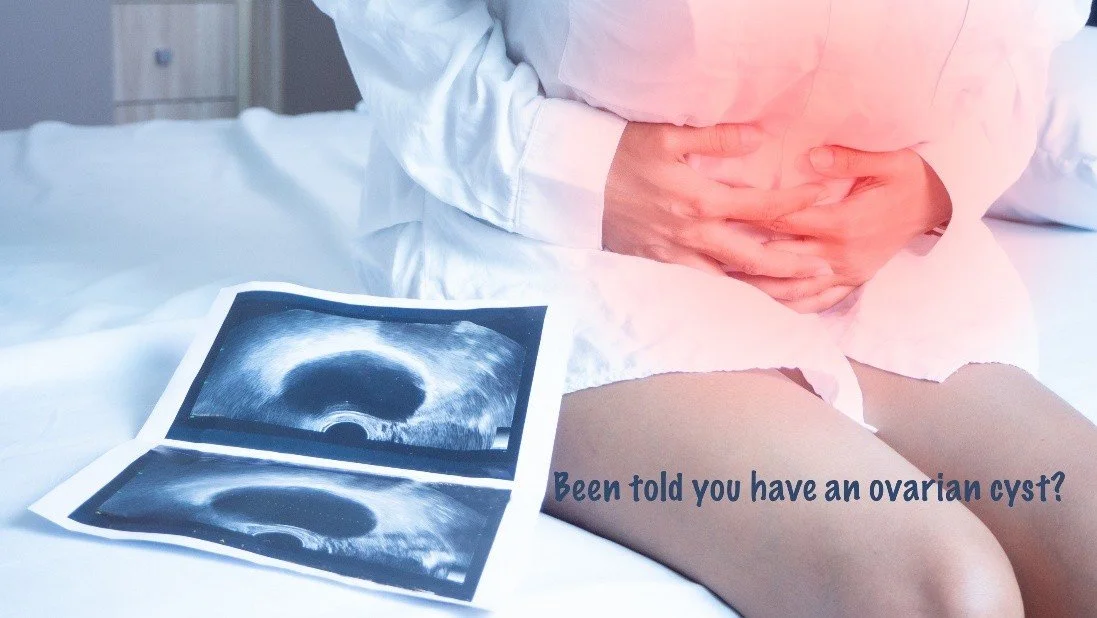
Ovarian Cysts
Ovarian cysts are extremely common and affects approximately 8 to 18 percent of all women. Many women become very anxious when they hear that they have an ovarian cyst because they are understandably concerned of the possibility of cancer, or they are concerned that they might need surgery. Fortunately, most ovarian cysts are benign, meaning they are not cancer. Also, most cysts do not require surgery. Most cysts are identified incidentally. This means that you were getting image for some other reason, such as a CT scan for a spine issue, and the radiologist took note of it.
Ovarian cancer occurs in 1 in 87 people who are at average risk for ovarian cancer. Average risk means that they do not have known mutation that increases the risk of ovarian cancer such as BRCA. The most significant risk factor for ovarian cancer is age. The average age at diagnosis is 63 with approximately 70 percent of those over the age of 55. Ultrasound findings that are concerning for cancer are complexity such as solid features. CT scan can also show signs of advanced disease such as ascites (fluid in the abdomen) and omental caking. However, there are many other causes of ascites besides ovarian cancer.
Sometimes, a provider will order a CA-125. This is a tumor marker for epithelial ovarian cancer. It has a high false-positive rate. In postmenopausal patients, a level of over 35 is considered elevated. In premenopausal women, there is no universally accepted cutoff. Some suggest 200 to 300, however this is controversial. CA-125 cannot be used to screen people for ovarian cancer as it is inaccurate. This is because many benign things can cause an elevated level such as a benign ovarian cyst, endometriosis, urinary tract infection, or any other inflammatory process in the abdomen. An elevated level does not mean you have ovarian cancer, and a negative does not mean that you do not have ovarian cancer. Its role is to risk stratify an identified ovarian mass to whether or not surgery is needed, follow up imaging (Repeat US, CT or MRI) is needed, or expectant management can be followed. Simply put, It is just one data point to help the provider recommend the most appropriate management.
Sometimes cysts cause significant pain. Larger cysts between 5 and 10 centimeters may cause a syndrome called ovarian torsion. This is where the cyst causes the ovary to twist on itself and restricts the blood flow to the ovary. This is an emergency. People with ovarian torsion often have severe abdominal pain that comes out of nowhere and it is often associated with nausea and vomiting. Ultrasound showing normal ovarian blood flow does NOT exclude torsion. In fact, normal blood flow on an ultrasound is only correct 50 percent of the time in excluding torsion.
There are several types of ovarian cysts. Functional ovarian cysts are the most common type of cyst. These are often simple cysts that form during the menstrual cycle. These are benign and often resolve without intervention after 2 cycles (6-8 weeks). Sometimes these can cause significant pain, especially if they start bleeding which forms what is called a hemorrhagic cyst. Most of the time, these cysts will also resolve without surgery.
Sometimes an ovary can form a teratoma or a dermoid cyst. These form from germ cells and often contain things like bone, teeth and hair. These can be present at birth and then grow during reproductive years. Management of these depends on the symptoms, size, malignancy risk, age and reproductive plans. Many of these cysts are asymptomatic, meaning they do not cause any discomfort.
Another type of cyst is called a cystadenoma. These cysts can become very large and require surgery to remove. They are, however, benign.
Endometriomas form cysts that sometimes cause pain. These result from having endometriosis. Management of these depends on the symptoms, size, age and reproductive plans.
There are no medications that make ovarian cysts resolve. There is some thought that taking an oral contraceptive can reduce the recurrence of functional ovarian cysts, however this is controversial. Surgery is performed if:
· There is concern for possible malignancy.
· They become persistent and causing symptoms.
· They cause severe discomfort.
· There is concern for torsion.
· There is ectopic pregnancy*.
*Ectopic pregnancy is a life-threatening condition and may require emergency surgery. If you are having significant pelvic pain and you have been sexually active, you should take a pregnancy test. Birth control can fail. If positive, you should seek care immediately.