
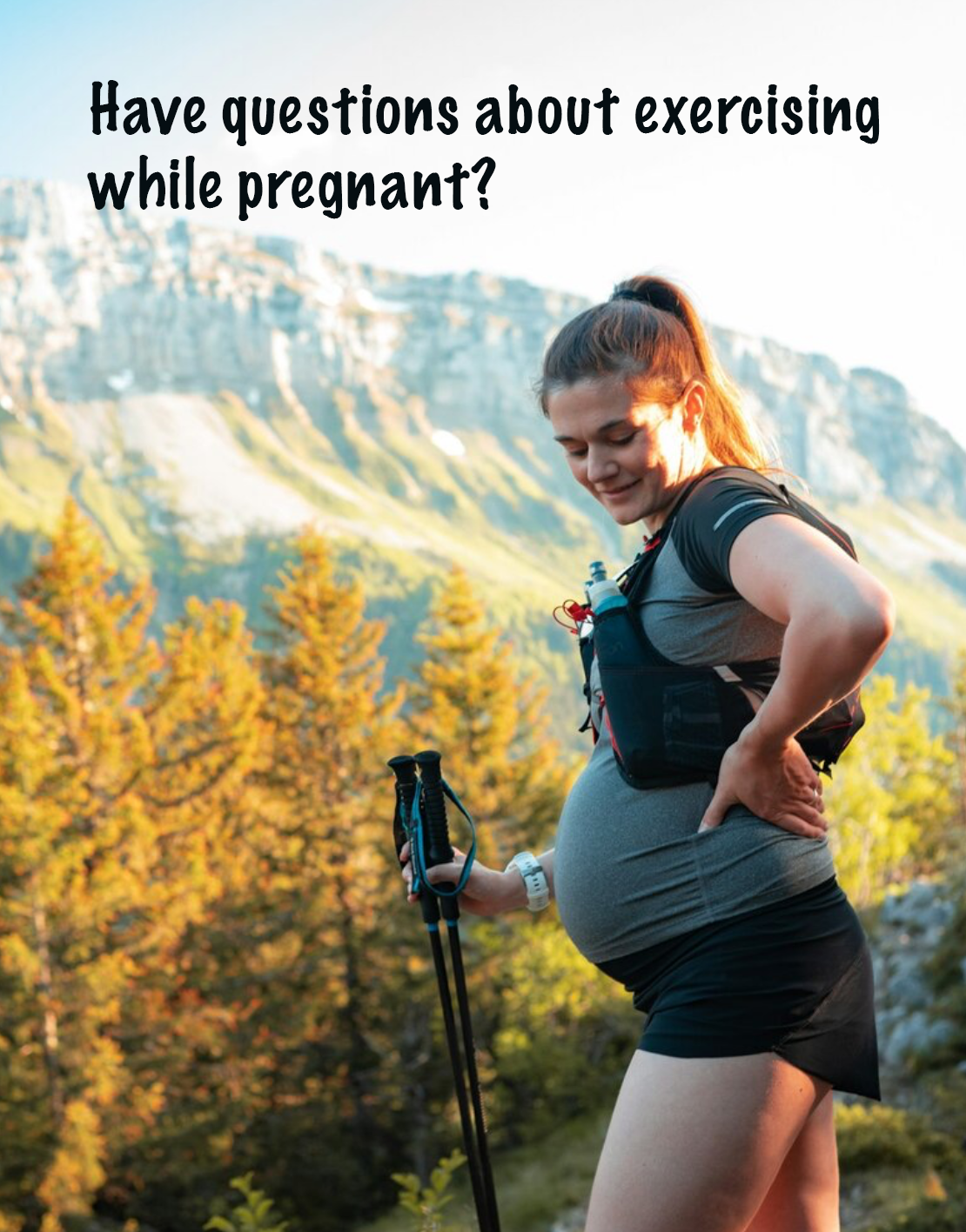
Exercising During Pregnancy
Exercising regularly plays an important role in having a healthy pregnancy both for you and your baby. Exercise in pregnancy reduces back pain, eases constipation and is healthy for your heart. In addition, it helps you maintain a healthy pregnancy weight and loose the excess baby weight after your baby arrives. It also may decrease your risk for cesarean delivery, preeclampsia, and gestational diabetes.
It is recommended that most pregnant women participate in moderate intensity aerobic exercise for at least 150 minutes per weak. This can be 30 minutes a day or divided into smaller or longer intervals. Moderate intensity means that your heart rate is up, your sweating, and you can speak sentences, but not able to sing. Aerobic means you are moving the large muscle groups in your arms and legs.
When you exercise, you may notice that your joints are unstable. This is because the pregnancy hormones are making your joints more mobile. Therefore, you should avoid jerking or high impact motion as it can put you at risk for injury. Adding to the balance problems, your center of gravity will gradually shift forward, putting you at risk for falls. You may notice that you cannot exercise to the same level as the pregnancy progresses. This is due to the increased demand your body has for oxygen.
When you exercise you should drink plenty of water, as you can become dehydrated very easily. Wearing a sports bra will help reduce discomfort while exercising. Wear loose fitting clothing to avoid being overheated.
If you have the following conditions, you should NOT exercise:
· Cerclage.
· Pregnant with twins or more.
· Placenta prevue after 26 weeks of pregnancy.
· Preterm labor.
· Preterm rupture of membranes.
· Preeclampsia or gestational hypertension.
· Certain types of heart and lung disease.
You should stop exercising and notify your doctor if you notice:
· Bleeding from the vagina.
· Feeling dizzy or faint.
· Chest pain or shortness of breath prior to exercising.
· Regular and painful contractions of the uterus.
· Gush of fluid or leaking from your vagina.
Specific Exercises Examples
· Brisk Walking.
· Water aerobics.
· Dancing.
· Hiking.
· General gardening, like raking, weeding, etc.
Examples of Exercises to Avoid
· Contact sports.
· Sports that risk you getting hit in the abdomen like basketball.
· Skydiving.
· Activities that put you at risk for overheating like “hot yoga, “or “hot Pilates.”
· Scuba diving.
· Activities with a high risk of fall such as snow skiing, off road biking, horseback riding, surfing and gymnastics.