
Medications During Pregnancy
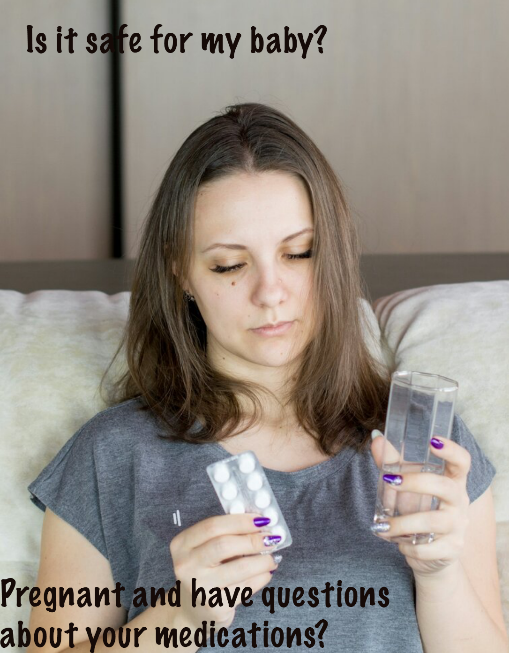
Finding out you are pregnant is an exciting time. However, for some comes anxiety regarding what medications they can or cannot take. First, do not simply stop all medications when you find out your pregnant without talking to your doctor. This is because, the potential risk of harm to you can be greater than potential risk to your baby. Furthermore, some medications cannot be stopped abruptly without significant complications.
The first thing to consider when discussing medications are the concepts of risk and association. Since most medications do not involve large clinical trials including pregnant women, stating that drug X causes Y is impossible. Instead, most data come from retrospective studies that look at data banks of birth defects and medications that patients took while pregnant. This means that the best that can be said is that taking drug X is associated with Y. For example, taking certain antiepileptic medications are associated with neural tube defects like spina bifida. However, it is unclear what is the causing agent, the medication, having epilepsy that requires an antiepileptic medication, both, or some other factor not yet identified.
In addition, the exact clinical impact of the statistical association is unclear. For example, taking lithium, a medication used to treat bipolar disorder, is associated with a 2-fold increase in the background risk of having a baby with Ebstein’s anomaly, a serious heart malformation. While this seems high, one must consider what is the background risk? The background risk is 1 in 200,000 live births. Therefore, doubling it is 2 per 200,000 or 1 in 100,000. How does this risk compare to a severe manic or depressive episode from untreated bipolar disorder?
Another example is acetaminophen (Tylenol) when pregnant. This controversy started with a NIH study in 2019 followed by a consensus statement. Neural development is complex and continues after birth until patients are 15-months of age. Conditions like autism spectrum disorder are multifactorial and are unlikely due to any singular cause.
Therefore, when considering the use of medications in pregnancy, it is all about risk versus benefit. For instance, what is the risk of a mild fetal anomaly versus the risk of malnutrition due to untreated hyperemesis gravidarum (nausea and vomiting of pregnancy)? What is the risk of a mild withdrawal syndrome versus the risk of maternal suicide or exposure to stress hormones due to untreated anxiety or depression?
Sometimes medication doses may need to be altered during pregnancy due to metabolism changes related to pregnancy. For women with hypothyroidism, the thyroid function levels are typically checked once per trimester to ensure adequate dosing. For diabetics, insulin is the medication of choice. This medication will often need significant dose changes throughout the pregnancy.
It is recommended that if one is considering pregnancy, they should discuss all their medications with their doctor so that the medications can be appropriately modified as needed.
Bottom line, discuss your health with your doctor. Nothing is without risk. Taking a medication may have a known risk, but having an untreated condition likewise has risks to both you and your baby.
Examples of medications generally considered safe during pregnancy
· Over the counter medications generally considered safe
o Acetaminophen (Tylenol).
o Antihistamines (Benadryl, Claritin, Allegra, Zyrtec).
o Cough suppressants (dextromethorphan, guaifenesin).
o Doxylamine (Unisom) and vitamin B6 for morning sickness
o Ginger supplements for morning sickness
o AVOID NSAIDS (ibuprofen, naproxen).
· Antibiotics
o Most antibiotics are safe.
o AVOID tetracyclines (doxycycline), floroquinalones (ciprofloxacin).
· Asthma
o Most medications are safe including inhaled stimulants and steriods.
· High Blood Pressure
o Generally, providers use nifedipine and labetalol.
o Others can be used, depending on the clinical picture.
o AVOID ACE inhibitors and ARBs (lisinopril, losartan etc.).
· Nausea and vomiting
o Most medications are safe.
o Doxylamine (Unisom) and vitamin B6, combined in the product Diclegis are preferred
o Ginger supplements may also help
o Ondansetron (Zofran) is used with caution in early pregnancy.
· Mental Health
o Most SSRI (Prozac, Celexa) are safe.
o All antidepressants have a class warning of possible NAS or neonatal withdrawal. This is more significant with medications like paroxetine.
o Antipsychotics are based on risk versus benefit.
o Antiepileptic medicines used are generally safe. You will need to take extra folic acid. AVOID valproic acid (Depakote), phenytoin, and lithium