
POLYCYSTIC OVARIAN SYNDROME (PCOS)
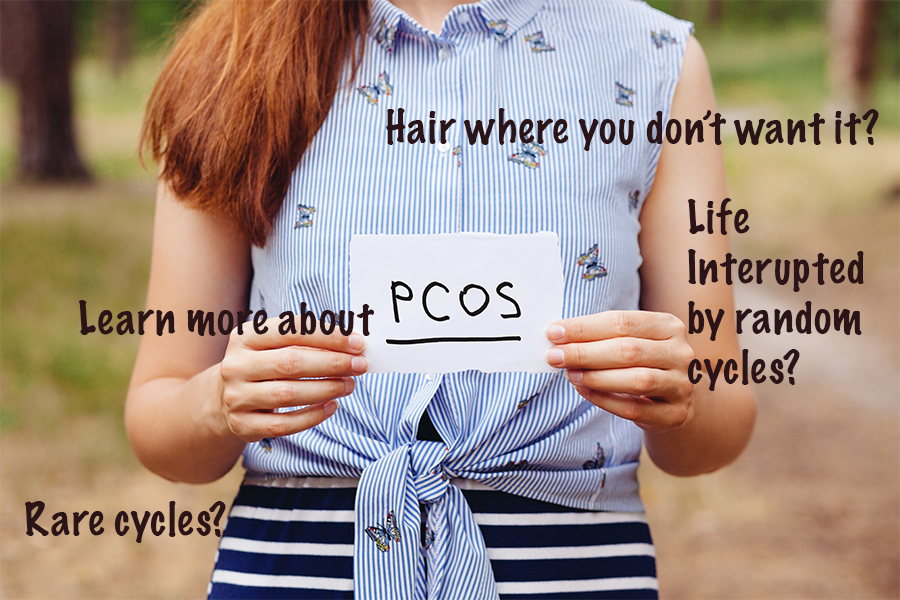
Polycystic Ovarian Syndrome or PCOS is one of the most common hormonal problems affecting 6 to 13 percent of reproductive aged women. Up to 70 percent of cases go undiagnosed. Women with PCOS can have a wide range of issues, including facial hair or severe acne. Additionally, women may have unwanted hair on their back, abdomen, or chest.
PCOS can also lead to women struggling with menstrual dysfunction. This includes having random and often heavy cycles or to the other extreme of not having cycles or just a handful of cycles per year.
Women may get frequent ovarian cysts or a characteristic “polycystic” look to the ovary. This is where the syndrome derives its name. However, normal ovaries in a young patient mid-cycle can often mimic this finding. There is no agreed upon diagnostic criteria. The most commonly used diagnostic criteria is the Rotterdam criteria. To have PCOS, a patient must have at least 2 of the 3 following:
Signs of too much androgens (facial hair, severe acne, etc) or elevated blood testosterone
Menstrual dysfunction from not ovulating
“Polycystic appearing” ovaries on ultrasound
It is believed that PCOS is caused by underlying anovulatory cycles. Meaning that the ovary does not ovulate as it should at regular 21 to 35 day intervals. In some patients, this leads to only having a handful of cycles per year. Alternatively, women may find themselves bleeding all the time. Chronically not ovulating can lead to excess testosterone which can lead to excessive hair where people don’t want it or hair loss. Elevated testosterone can lead to insulin resistance which increases the risk of type 2 diabetes. Unfortunately, the elevated testosterone and insulin resistance can worsen ovarian function in a worsening spiral.
Your doctor may order an ultrasound, check labs that measure ovarian function and testosterone levels. In addition, your doctor may screen your for insulin resistance or diabetes. There is no cure. Treatment involves managing the symptoms, which can take several months to improve.
Lifestyle management can make a difference. Loosing just 5% of body weight can normalize cycles.
PCOS is associated with infertility or subfertility (having trouble getting pregnant). However, just because a person has PCOS THEY ABSOLUTELY CAN GET PREGNANT. Ovulation can be induced by certain medications. Sometimes patients may need to be referred to a specialist.
PCOS is not the only cause of the symptoms that can lead to a diagnosis of PCOS. Excessive weight gain or loss, malnutrition, severe stress, or severe illness can lead to ovulatory dysfunction. There are also other numerous, although vary rare, conditions that can mimic PCOS.
Medical Treatment Examples
· Menstrual Dysfunction
o Birth Control
o Progesterones
· Hirsutism (facial hair, etc)
o Birth Control with drospiranone
o Spironolactone
o Eflornithine cream
· Insulin Resistance
o Metformin
o Myo and D-Chiro Inositol
o Weight loss
· Infertility
o Clomiphene Citrate
o Letrozole
Call today for an appointment!active, you should take a pregnancy test. Birth control can fail. If positive, you should seek care immediately.